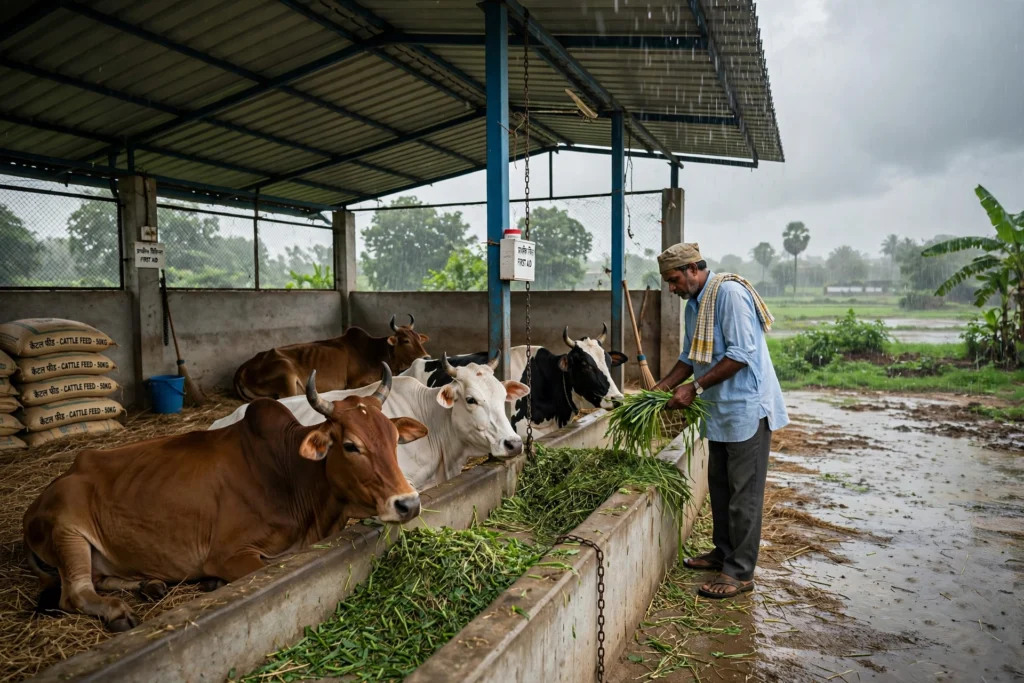
Monsoon brings FMD, HS and mastitis risks. Here’s a preventive care checklist for the rainy season.
1. Prepare the premises before heavy rain
Inspect drainage, roof leaks and areas where water gathers. Keep feed stores dry and protect bedding from rain. A simple daily walk around the unit can identify problems before animals spend hours in damp or dirty resting areas.
2. Keep milking and resting areas clean
Maintain the farm’s udder hygiene and equipment cleaning routine even when the weather makes work slower. Check udders and milk for changes and report concerns promptly. Clean, comfortable housing and a consistent milking process form part of mastitis prevention.
3. Watch calves and newly introduced animals
Keep calf areas clean and separately ventilated. Monitor appetite, behaviour and manure changes. Apply quarantine and veterinary checks to new arrivals rather than mixing them into the herd immediately. Staff should know which signs require a call to the veterinarian.
4. Review vaccination and parasite plans
Arrange a seasonal review with your local veterinarian. Disease risks and appropriate vaccination programmes differ by area and herd. Do not use a generic online calendar as a substitute for local advice, and do not treat every animal for parasites solely because the monsoon has begun.
5. Keep a daily monsoon checklist
Record water and feed checks, bedding condition, drainage issues, unusual milk and animals requiring observation. Assign a person to each task. Repair recurring problems and keep veterinary contact details accessible so the team can respond quickly when an animal becomes unwell.
Veterinary Team
The Grooming Animal Healthcare veterinary team brings 20+ years of field experience in dairy nutrition, herd health and preventive care — helping farmers raise healthier, more productive animals.